Compound word tips · A small learning aid
How German Compound Words Work
German loves building new words from smaller ones. A long word often has an idea you already recognise inside it.
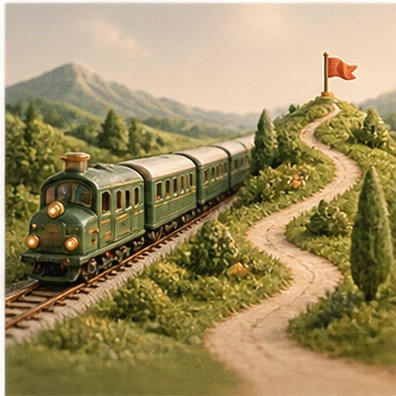
Zug + Fahrt → Zugfahrt
The last word is the boss
For noun compounds like these, the last part tells you what the whole thing is. It also gives the compound its gender and article.
Der Spielplatz, because the last word is der Platz.
Quick rule: look at the last noun to find the article. Die Tür → die Haustür.
Work from the end
Kinder + Zimmer → Kinderzimmer
- What is it?
- das Zimmer — a room
- What kind of room?
- Kinder — children → a children’s room
When a word looks long, start with the last part first. Das Kinderzimmer →
Sometimes German adds “glue”
Linking elements, called Fugenelemente, can sit between word parts. Common ones include -s-, -n- and -en-.
- Wohnung + s + Schlüssel → Wohnungsschlüsselapartment + key → apartment key
- Tasche + n + Geld → Taschengeldpocket + money → pocket money
- Haus + Tür → HaustürNo linking element needed here.
There is no single rule that predicts every linking element. Learn the complete compound as it is used.
Not only noun + noun
Noun + noun
Adjective + noun
Verb + noun
The first word can change form: warten → Warte-. You don’t always join the dictionary forms unchanged.
One compound can teach you several words
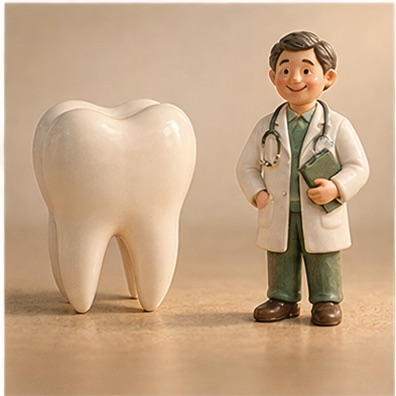
Zahn + Arzt → Zahnarzt
Learning Zahnarzt also gives you another encounter with Zahn and Arzt. One new meaning, two familiar building blocks.
When you see a long German word…
- Find the last word. What is the thing?
- Look at the part before it. What kind of thing?
- Put the ideas together.
The parts give you a clue. Check the whole word’s meaning too: a Kühlschrank is a refrigerator, not just any cool cupboard.